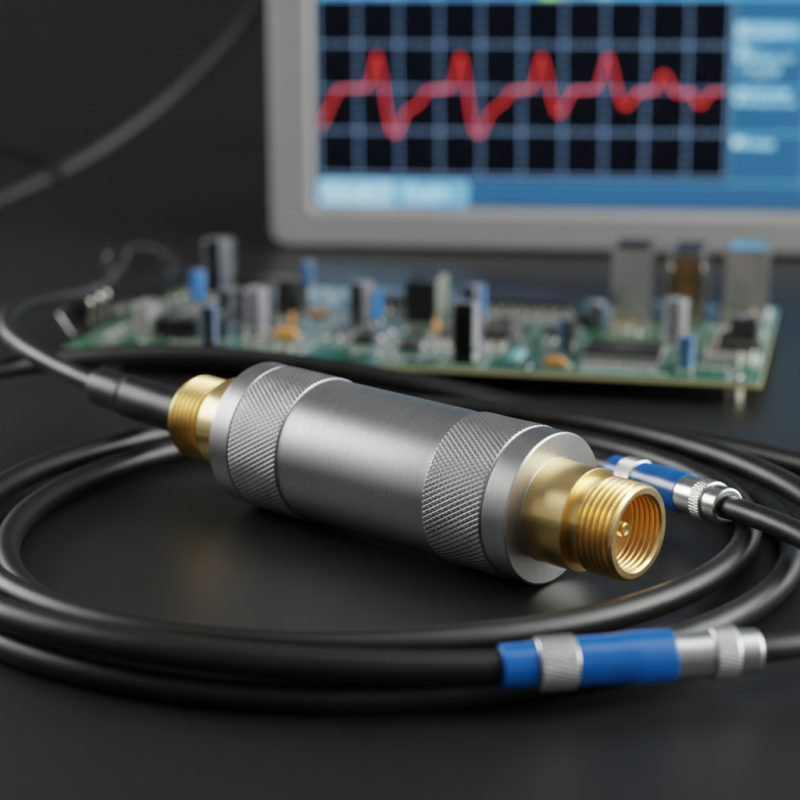
What is a Coaxial Attenuator and How Does it Work?
A Coaxial Attenuator is an essential component in many electronic systems. It plays a crucial role in managing signal strength. These devices help reduce unwanted noise and interference in signal transmission. Understanding how a coaxial attenuator works can improve the performance of various equipment.
In practical scenarios, coaxial attenuators are used in telecommunications. They ensure signals are at optimal levels for processing. Without them, systems may face distortion or damage. Users often overlook these devices, but their impact is significant. A simple bent cable can lead to signal degradation.
While coaxial attenuators work effectively, they aren't perfect. Calibration and proper installation are critical. Any mistake can lead to subpar performance. A small error can affect signal quality. Thus, users must pay attention to details when using them.
What is a Coaxial Attenuator?
A coaxial attenuator is a vital component in radio frequency (RF) applications. Its primary purpose is to reduce signal power without distorting it. This device can manage signal levels in communication systems effectively.
In a coaxial attenuator, a passive circuit structure is used. It typically consists of resistors that absorb part of the signal's power. For instance, a 10 dB attenuator reduces the signal's power to one-tenth of its original strength. According to industry reports, these devices are crucial in maintaining optimal signal levels in various systems, preventing overloads, and ensuring clean transmission.
Tips: When using a coaxial attenuator, consider the frequency range. Certain attenuators perform better at specific frequencies. This specificity can impact performance. Also, ensure proper termination to avoid reflections. Reflections may cause unexpected signal behavior.
Installing coaxial attenuators requires precision. Miscalculations can lead to inconsistent results. Sometimes, users overlook the importance of quality connectors, which can undermine the entire setup. Regular testing is advisable to confirm performance. This regularity helps identify any deterioration or failure events early.
The Principle of Attenuation in Coaxial Systems
Coaxial attenuators play a key role in managing signal strength. They are crucial in many communication systems. Understanding the principle of attenuation is essential. Attenuation refers to the reduction of signal power. This process can occur naturally in coaxial cables due to resistance and other factors.
In a coaxial system, signals travel through the cable. As they do so, some energy is lost. This loss can be due to the materials used in the cable. Factors like distance and frequency also contribute to attenuation. The signals might weaken over long distances. High frequencies often suffer more attenuation than low ones.
Using a coaxial attenuator can help control this loss. It allows engineers to adjust signal levels. A well-tuned system avoids distortion. However, the balance is delicate. Too much attenuation can impact performance negatively. Fine-tuning is necessary for optimal results. Proper understanding of attenuation can lead to better system designs.
Types of Coaxial Attenuators and Their Applications
Coaxial attenuators come in various types, each serving specific applications. Fixed coaxial attenuators are among the most common. They provide a constant level of signal reduction. These devices are useful in testing environments, calibrating equipment, and adjusting signal levels. They can range from a few dB to over 30 dB of attenuation.
Variable coaxial attenuators allow users to adjust the signal strength. This flexibility is advantageous in experimental setups. Engineers often use them in communication systems, where signal adjustments are needed. Moreover, specialized attenuators, like digital ones, offer advanced functionalities. They can be integrated into automated systems for remote adjustments.
Despite their utility, coaxial attenuators aren't flawless. Imbalances in attenuation can occur. This might lead to signal distortion or degradation. Engineers must consider this in design. They need to experiment with different types to find the best fit for their specific application. It's essential to understand that, while they can improve signal quality, they require careful handling and testing.
How Coaxial Attenuators Influence Signal Quality
Coaxial attenuators play a critical role in influencing signal quality. These components reduce signal power without affecting the impedance in a system. They do this by utilizing resistive elements. The result is a controlled decrease in amplitude, which helps to prevent distortion and maintain signal integrity.
According to industry reports, improper signal levels can lead to substantial losses in data transmission efficiency. Studies show that a 3 dB reduction can be crucial in maintaining optimal performance. When signals exceed specific thresholds, they can create interference, affecting data quality. This is particularly important in high-frequency applications, where even minor imperfections can lead to significant issues.
In practice, the selection of attenuators must be precise. The wrong choice can lead to unintended results, such as unwanted noise or distortion. Reports have indicated that 30% of communication failures are linked to inadequate signal management. Thus, careful consideration of coaxial attenuators can greatly enhance signal quality and overall system performance.
What is a Coaxial Attenuator and How Does it Work?
Coaxial attenuators are devices used to reduce the power of a signal without degrading its quality significantly. The chart above illustrates how different levels of attenuation (in dB) influence the signal-to-noise ratio (SNR), a critical factor in determining signal quality in communication systems.
Installation and Maintenance of Coaxial Attenuators
Coaxial attenuators are important for controlling signal levels in various applications. Proper installation and maintenance can enhance their effectiveness. When installing, ensure the connectors are clean. Dirty connectors can lead to poor performance. Use appropriate tools for a snug fit. This helps avoid signal losses.
Regular maintenance is crucial. Check for physical damage often. A frayed cable or loose connections can degrade performance. Dust and moisture can also affect function. Keep the attenuator in a dry environment. Inspect for wear and tear at least once a month.
**Tips:** Always keep spare attenuators on hand. This can save time during repairs. Label your equipment clearly. It helps in quick identification during maintenance. Don’t overlook small issues; they may lead to bigger problems later.
What is a Coaxial Attenuator and How Does it Work? - Installation and Maintenance of Coaxial Attenuators
| Parameter | Description | Value |
| Type | Attenuation device | Coaxial |
| Frequency Range | Operational bandwidth | DC to 18 GHz |
| Attenuation Levels | Amount of signal reduction | 3 dB, 6 dB, 10 dB, 20 dB |
| Connector Type | Type of connector used | N Type, SMA, BNC |
| Power Rating | Maximum power handling | 1W to 20W |
| Installation | Mounting methods | Inline or PCB mount |
| Maintenance | Care for longevity | Regular inspection, clean connections |