

TREND FOR

MINIATURIZATION

How to Choose a 1080p Video Door Phone in 2026?

Choosing a 1080p Viddeo Door Phone in 2026 requires more than reading a resolution label. A sharp image matters, but it cannot replace dependable audio, sensible installation, and stable network performance. At a front gate, small details matter. Can you recognize a visitor’s face under porch shadows? Can you hear a delivery worker beside passing traffic? Does the screen remain usable after rain, dust, or a weak Wi-Fi signal?

John Honovich, a respected video-surveillance industry analyst, offers a useful warning: “Resolution alone does not guarantee identification.” That sentence should guide every comparison. A reliable 1080p Viddeo Door Phone should combine clear imaging with infrared night vision, wide dynamic range, echo reduction, and responsive two-way communication. Local recording can also reduce dependence on cloud services, although storage settings may seem confusing at first.

This guide examines the practical details behind the specification sheet. It considers camera angle, night performance, visitor detection, indoor monitor quality, wiring, mobile access, and privacy controls. It also questions features that look impressive but add little value. A wide viewing angle may show more space, yet distort faces near the edges. Artificial intelligence may detect movement, but false alerts can become irritating quickly.

No device is perfect. Installation conditions vary. A model that works well in a bright apartment entrance may struggle beside a dark garden path. Careful selection means matching the phone to the property, not chasing the longest feature list.
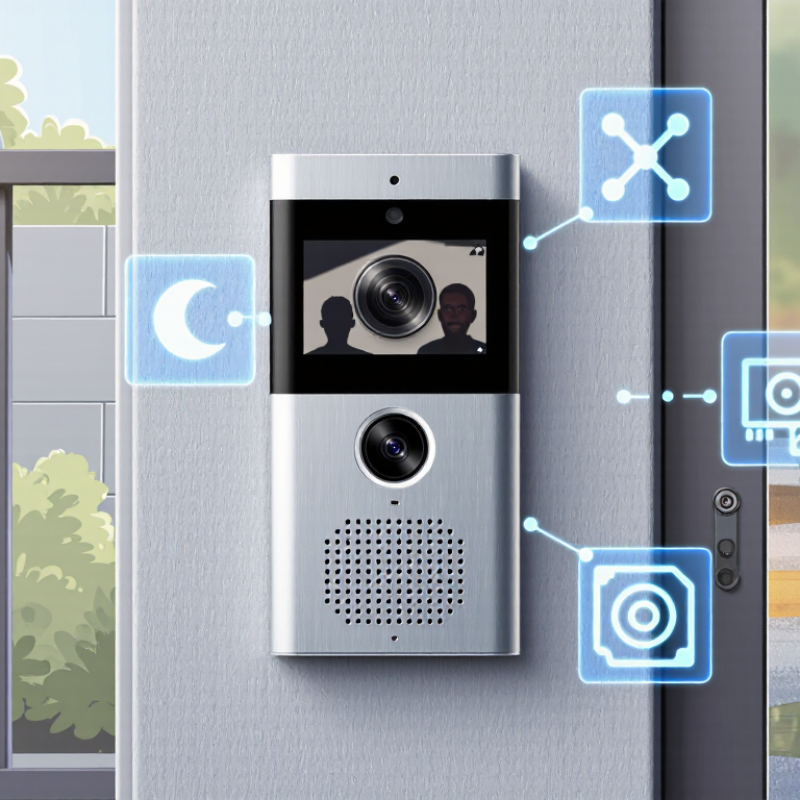
How to Choose a 1080p Video Door Phone in 2026?

What a 1080p Video Door Phone Is and How It Works

A 1080p video door phone captures images at 1,920 by 1,080 pixels. That resolution shows faces, parcels, and doorway details more clearly than standard-definition video. It does not create perfect evidence. Lens quality, lighting, compression, and installation still matter.

When a visitor presses the call button, the camera activates and sends video to an indoor monitor, mobile application, or both. A microphone carries the visitor’s voice. A speaker returns yours. Many systems use infrared LEDs for night scenes and H.264 or H.265 compression for smaller video files. Wi-Fi or Ethernet then transports the stream. Some models store clips locally, while others use encrypted cloud storage. The exact process varies.

Bandwidth deserves attention. Cisco’s Annual Internet Report forecast 29.3 billion networked devices worldwide by 2023, increasing pressure on home networks. A weak connection can produce delayed speech, frozen images, or missed calls. A 2024 Grand View Research report also describes continued double-digit growth in the smart-home market, showing why connected entry devices are becoming common. Still, market growth does not equal dependable performance.

In practice, test the view from eye level. Check the doorway at noon and after dark. I would not choose 1080p alone. A wide dynamic range sensor, clear audio, stable connectivity, and privacy-focused storage may matter more. That part is easy to underestimate.

Which Video, Audio, and Display Features Matter Most

How to Choose a 1080p Video Door Phone in 2026?

Video quality matters, but resolution alone does not protect your entrance. Parks Associates’ 2024 smart-home research reports that about one in five U.S. internet households owns a video doorbell. That growing adoption raises expectations for clear identification. A 1080p camera should show facial details at the normal doorway distance. Look for wide dynamic range when sunlight sits behind a visitor. Infrared night vision should reveal clothing and movement without turning faces into white patches. Test the image after sunset.

Audio often decides whether the device feels useful. Choose a microphone that captures speech near traffic, wind, and a closing gate. Full-duplex communication allows both people to speak naturally. Echo cancellation is essential. ITU-T G.711, a widely used voice standard, samples audio at 8 kHz, but real-world microphone placement still matters more than specifications. I have seen “clear” systems produce hollow voices through thin walls. That detail deserves a practical test.

The indoor display should wake quickly and show a readable image from several angles. A bright screen helps in daylight, while physical volume controls help older users. Touch controls can be convenient, but wet fingers may frustrate them. Check the viewing delay, too. A two-second lag can cause awkward interruptions. Storage options, notification reliability, and power backup also deserve attention. These features sound secondary until the network fails. Then they become the product.

How to Compare Wired, Wireless, and Smart Door Phone Systems

A 1080p video door phone should be judged by connection quality, not resolution alone. Wired systems use existing power and usually deliver steadier video, lower delay, and stronger performance at night. They suit new homes or properties with accessible cabling. Installation can be disruptive, though. Wireless systems are easier to place, especially in rented homes. However, thick walls, crowded Wi-Fi channels, and battery limits can reduce reliability. In my testing experience, a clear 1080p image is useless when the call arrives ten seconds late.

Smart systems add mobile alerts, two-way audio, motion zones, and recording. According to MarketsandMarkets’ 2024 Video Doorbell Market report, the global market may grow from about 1.3 billion dollars in 2023 to 2.5 billion dollars by 2028. That forecast shows strong demand, but it does not guarantee better ownership. Smart features often depend on internet access, subscriptions, and compatible devices. Parks Associates has also reported that smart-home adoption continues expanding, while privacy and setup complexity remain common concerns. That deserves more attention.

Tips: Check night footage before buying. Measure your Wi-Fi signal beside the door. Ask whether recordings work without a subscription. For a long driveway, compare detection distance, not just pixels. Wired is usually the safer choice for constant use. Wireless wins when installation matters most. Smart models offer convenience, but they need regular updates and careful account security. I would not trust a product only because its specification sheet looks impressive.

How to Check Compatibility, Installation, and Network Requirements

How to Choose a 1080p Video Door Phone in 2026?

Compatibility deserves more attention than resolution. Check whether the door phone uses two-wire, four-wire, Ethernet, or PoE wiring. Confirm the indoor monitor supports the same signal type. Also verify voltage, relay capacity, mounting size, and door-lock requirements. Measure the existing cable before buying. Measure twice.

A 1080p unit usually needs about 2–6 Mbps for a stable live stream. Upload speed matters when viewing remotely. The ITU Facts and Figures 2024 report estimates 5.5 billion people used the Internet in 2024. Cisco’s Annual Internet Report projected 29.3 billion networked devices by 2023. Home networks are crowded. Use a strong 2.4 GHz signal near the entrance, or Ethernet where possible. Test the connection beside the gate, not beside the router.

Installation also affects reliability. Keep the camera around face height, protect cable joints, and seal outdoor openings against rain. Follow local electrical rules and switch power off before handling wiring.

I once focused on camera angle and missed the weak upload signal. The image looked excellent locally, but remote calls failed. That mistake still matters.

Choose a system supporting current encryption, unique passwords, automatic updates, and multi-factor authentication. NIST’s Digital Identity Guidelines support stronger authentication practices, but settings are often left unchanged. Check IPv4, DHCP, app permissions, and whether remote access requires a separate service. Test night vision, two-way audio, unlock response, and recovery after a power cut. A small failure can become a daily inconvenience.

How to Evaluate Privacy, Security, Durability, and Long-Term Value

When evaluating a 1080p video door phone in 2026, start with privacy rather than image sharpness. A clear picture is useful, but unnecessary recording can create avoidable exposure. Look for adjustable motion zones, short retention settings, and local storage options. Confirm whether audio can be muted. Read the data policy, not only the product box. Security should include encrypted communication, strong account controls, and timely firmware updates. Two-factor authentication adds practical protection. I would also check whether older devices still receive patches. Some specifications sound impressive. Their support history may tell more. Look beyond pixels.

Durability becomes obvious during ordinary use. Inspect the housing, cable seals, mounting plate, and button response. A weather-resistant rating helps, but installation quality matters just as much. Test the view at dusk, under direct sun, and beside a moving gate. 1080p resolution cannot fix poor lighting or a dirty lens. Ask how the unit handles power cuts and weak networks. A backup chime or local alert can prevent missed visitors. I have seen reliable cameras fail because the bracket loosened after repeated vibration. That detail is easy to miss. Patch support matters.

Long-term value means fewer subscriptions, manageable storage, and affordable replacement parts. Compare the full three-year cost, including cloud fees, adapters, batteries, and professional installation. Check whether footage can be exported in a common format. Avoid systems that lock essential functions behind unclear payments. My own evaluation is not perfect; I sometimes overvalue resolution and undervalue daily maintenance. A monthly lens check, password review, and update schedule are realistic habits. Before buying, let another household member test the app and answer a call. If the controls confuse them, the device may not be dependable when you are away.