Top 10 Facts About Thermal Cash Register Paper You Need to Know?
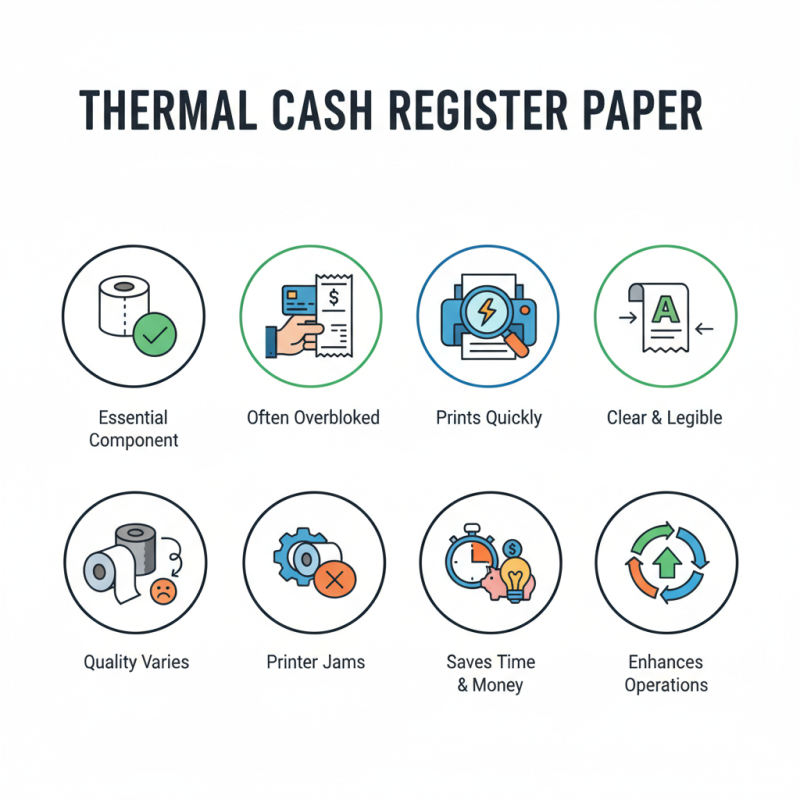
In the world of retail, Thermal Cash Register Paper is an essential component. Many businesses rely on this paper for daily transactions. However, it is often overlooked. This type of paper ensures that receipts print quickly and clearly. Customers appreciate receiving legible receipts. Yet, the quality of thermal cash register paper can vary widely.
Understanding its properties helps businesses make better choices. Not all thermal paper is created equal. Some might fade quickly, affecting customer experience. Others may be prone to jamming in printers, leading to inefficiencies. Observing these details can save time and money in the long run.
Being informed about thermal cash register paper will enhance your retail operations. Small choices, like the paper used, can drastically influence workflow. Consider how often your printer malfunctions due to poor-quality paper. Reflect on your paper supply choices to improve your business's reliability.
What Is Thermal Cash Register Paper and How Does It Work?
Thermal cash register paper is an essential component in many retail environments. This specialized paper uses heat to create images, eliminating the need for ink. The thermal printing process works when the printer's thermal head heats specific areas of the paper, darkening it and forming characters or images.
Many businesses opt for thermal paper due to its efficiency. According to industry reports, nearly 90% of all receipts in retail are printed on thermal paper. This method is quick and often quieter than traditional printing. However, it also comes with drawbacks. Thermal paper can fade over time, especially when exposed to heat or light.
Tips: Always store thermal paper in a cool, dry place. Avoid direct sunlight to extend its lifespan. Check for proper storage and rotation practices to maintain quality.
Another aspect to consider is environmental impact. Most thermal papers contain BPA or BPS, which are chemicals that may have health implications. Researchers suggest looking for BPA-free options to reduce risks.
Tips: Research suppliers for eco-friendly paper alternatives. A small shift can have a significant positive impact on health and the environment. Consider your options carefully.
Top 10 Facts About Thermal Cash Register Paper
This chart illustrates key facts about thermal cash register paper including its qualities and usage in different sectors.
The Benefits of Using Thermal Cash Register Paper in Businesses
Using thermal cash register paper can significantly benefit businesses. According to a recent industry report, thermal paper offers faster transaction speeds. This efficiency can lead to shorter wait times for customers. In fast-paced environments, every second counts. Research shows that less time spent at the register can improve the overall customer experience.
Moreover, thermal paper is known for its durability. It can withstand various environmental factors, making it preferable for many businesses. Reports indicate that as much as 90% of thermal paper is resistant to fading over time. However, there are concerns. Some thermal papers contain chemicals that may not be environmentally friendly. This raises questions about sustainability in business practices.
Cost efficiency is another factor to consider. Thermal paper rolls generally have a lower cost compared to traditional paper. Businesses can save money in the long run. Yet, it is important to ensure printing quality. Poor quality thermal paper can lead to problems like smudging or fading. These issues can undermine the benefits that thermal paper provides. Balancing cost and quality is key for effective operations.
Top 10 Facts About Thermal Cash Register Paper You Need to Know
| Fact Number | Description | Benefit |
| 1 | Thermal cash register paper is designed to react to heat. | Quick printing without the need for ink or toner. |
| 2 | Available in various widths, typically between 2 to 3 inches. | Customizable for different point-of-sale setups. |
| 3 | High-quality thermal paper provides clearer prints. | Enhanced readability of receipts increases customer satisfaction. |
| 4 | Thermal paper is often more eco-friendly compared to traditional paper. | Reduced environmental impact attracts eco-conscious customers. |
| 5 | Used in various industries, from retail to healthcare. | Versatility allows businesses to streamline operations. |
| 6 | Thermal paper can have a longer shelf life if stored properly. | Less wastage and better inventory management. |
| 7 | Some thermal papers offer resistance to fading. | Important for document retention and proof of transactions. |
| 8 | Can be used for both printing and labeling purposes. | Enhances operational efficiency in various applications. |
| 9 | Some thermal papers are designed to be more tear-resistant. | Increased durability for high-volume usage scenarios. |
| 10 | Availability in bulk leads to cost savings for businesses. | Better budget management and increased ROI. |
Understanding the Different Types of Thermal Paper Available
Thermal cash register paper comes in various types, each designed for specific tasks. One common type is standard thermal paper. It's suitable for everyday transactions and provides clear prints. You might see it in many retail settings. Another type is high-temperature thermal paper, which withstands heat better. This makes it ideal for environments like kitchens.
There are also formulations that resist fading. These are perfect for businesses needing durability. Consider applications requiring long-term storage. Using the wrong paper can lead to issues, like unreadable receipts or smudges. There are even environmentally friendly options available. They are made from sustainable materials.
Choosing the right thermal paper is vital. Not all papers are created equal. They differ in thickness, sensitivity, and coating. Each choice impacts the print quality and lifespan. By understanding your needs, you prevent waste and enhance efficiency. Consider your specific requirements carefully before making a decision.
Key Factors to Consider When Choosing Thermal Cash Register Paper
When choosing thermal cash register paper, there are several key factors to keep in mind. First, check the paper's dimensions. The standard widths are usually between 2 and 3 inches. However, businesses often overlook the importance of the roll length. A longer roll reduces the frequency of changes, enhancing operational efficiency. According to a report by the National Retail Federation, 28% of retailers experience delays due to inefficient paper usage.
Another critical aspect is the paper's thermal sensitivity. This affects print clarity and lifespan. Papers with high sensitivity provide sharper images. However, they might fade quicker when exposed to heat and light. A study from the Paper Industry Association suggests that 50% of printed receipts degrade significantly within one month due to environmental factors. It’s essential to balance sensitivity and longevity based on your business needs.
Quality is also non-negotiable. Low-quality paper can lead to printing issues. It might jam, causing delays and frustration. Look for papers that meet industry standards. Yet, many businesses still opt for cheaper options, risking customer satisfaction. In the long run, investing in better quality paper can save money and enhance service speed. Finding the right balance is crucial, but not every business gets it right.
Best Practices for Storing and Maintaining Thermal Paper Products
Proper storage and maintenance of thermal cash register paper are crucial for longevity and performance. Thermal paper is sensitive to heat and light. Ideally, it should be stored in a cool, dry place, away from direct sunlight. According to industry reports, exposure to high temperatures can cause the paper to darken prematurely. This can lead to unreadable receipts, causing inconvenience for both businesses and customers.
Humidity also plays a significant role in the preservation of thermal paper. High humidity can lead to curling and warping, making the paper difficult to use. It is recommended to keep the storage environment below 70% relative humidity. Many businesses overlook these guidelines, leading to wasted resources and financial loss. Regularly checking storage conditions can prevent such issues.
Handling thermal paper is equally important. Always ensure that hands are clean and dry when handling the rolls. Oils and contaminants can compromise the paper’s thermal coating. While it may seem minor, these little details can impact the usability of the paper significantly. Neglecting these practices often results in increased costs over time due to misprints and replacements.