

Choosing the right Lithium Battery supplier can shape product safety, delivery stability, and long-term operating costs. Global buyers often compare price first, yet price alone reveals little about cell quality, factory discipline, or after-sales support. A reliable supplier should explain its battery chemistry, capacity range, production controls, and testing process in clear terms.
Look for documented quality systems, traceable materials, and consistent inspection records. Ask how the supplier manages cell matching, welding quality, battery management systems, and thermal performance. Request recent test reports, sample units, and evidence of compliance with applicable transport and product requirements. A serious manufacturer should also discuss packaging, labeling, warranty terms, and response times before any large purchase.
Details matter. A loose connector can delay a shipment. Poorly matched cells can reduce usable capacity. Buyers should review production samples under realistic conditions, including temperature, charging cycles, vibration, and storage time. Supplier visits or independent inspections may provide stronger evidence than polished brochures. Still, no shortlist is perfect. Factory data can change, and one successful sample does not guarantee every batch. That is why staged orders, written specifications, and repeat testing remain valuable. This guide examines leading Lithium Battery suppliers through practical criteria, including manufacturing experience, technical capability, global logistics, service reliability, and transparent documentation. It aims to help buyers ask better questions, reduce avoidable risks, and select a partner suited to their application rather than the cheapest available quote.
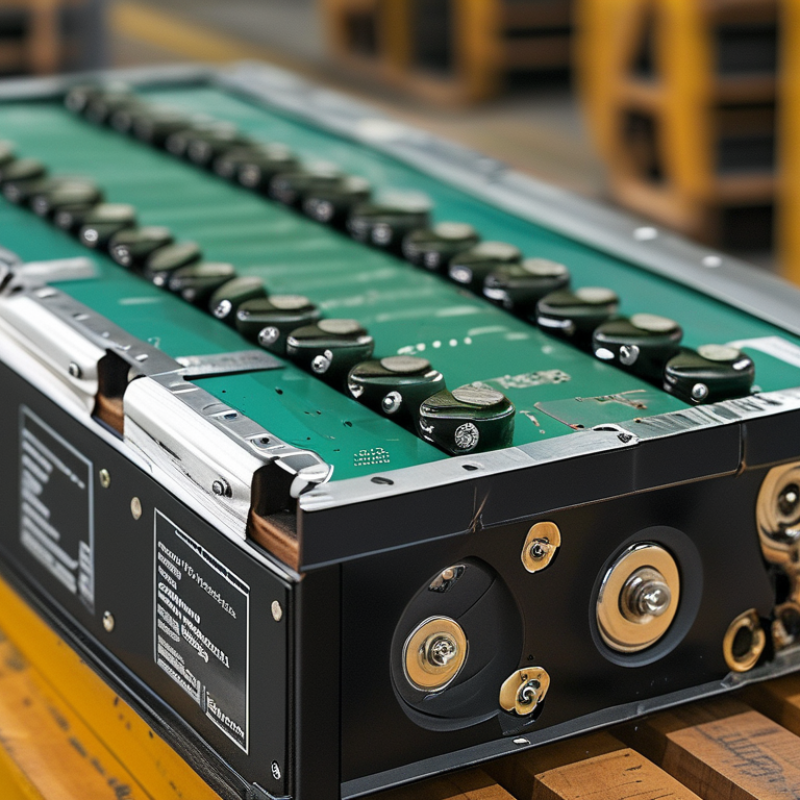
A leading lithium battery supplier offers more than attractive pricing and a polished catalog. It demonstrates stable cell performance through documented testing, traceable materials, and consistent production controls. Buyers should request capacity reports, cycle-life data, safety test records, and shipment inspection procedures. Vague claims deserve careful questions. Clear evidence matters.
Practical experience also separates capable suppliers from temporary traders. An experienced supplier can explain thermal management, battery protection systems, charging limits, and storage conditions in plain language. It should adapt designs to voltage, capacity, enclosure, and operating temperature requirements. Sample units should perform consistently across repeated tests, not only during one impressive demonstration. Small details matter.
Reliability appears in communication and after-sales support. Technical answers should arrive quickly, with drawings, manuals, and change records kept in an organized system. A strong supplier also identifies limitations before production begins. No supplier is flawless. That is important. A missed assumption about humidity, vibration, or connector fit can cause expensive delays. Buyers should inspect production areas when possible and compare sample results with later batches. Independent testing remains valuable, especially for large orders or demanding applications. A dependable supplier welcomes scrutiny rather than treating questions as distrust.
What Defines a Leading Lithium Battery Supplier?
A leading supplier must be able to support rapidly expanding demand while maintaining consistent quality, scalable production, reliable delivery, and compliance with international safety standards. Global EV battery demand increased from approximately 330 GWh in 2021 to more than 1,000 GWh in 2024, based on rounded estimates from the International Energy Agency.
Reliable lithium battery suppliers support global buyers through more than production capacity. They adapt cell chemistry, voltage, capacity, and pack design to specific equipment. A supplier serving warehouse vehicles may need different priorities than one supporting medical devices or solar storage. Clear technical drawings, sample testing, and documented quality checks reduce costly misunderstandings.
International service also depends on communication and logistics. Experienced suppliers explain shipment requirements, packaging procedures, labeling, and available transport options before dispatch. They should provide traceability for cells, production batches, inspection records, and safety documentation. Local support can improve installation and maintenance, especially when time zones create delays. However, no supplier gets every detail right. Buyers should verify claims instead of trusting polished sales language.
Tips: Ask for recent test reports, production photographs, and a written quality-control process. Confirm warranty terms, replacement procedures, and response times. Request a sample before placing a large order. Check whether the supplier can support your destination’s import and safety requirements. Small details matter.
Some suppliers offer customization, but customization can increase lead times and testing costs. A dependable partner explains these trade-offs openly. Buyers should also review capacity consistency, not just the lowest quotation. A battery may look competitive on paper yet perform poorly under heat, vibration, or frequent cycling. Practical evaluation remains essential for safer and more predictable global purchasing.
Reliable lithium battery suppliers should prove quality through measurable controls, not polished brochures. Buyers need records for cell origin, batch numbers, production dates, and process changes. Traceability matters when a shipment shows uneven capacity or unexpected heating. Ask for factory test data, not only a final inspection report.
Battery safety begins with cell consistency and a properly designed battery management system. Check overcharge, over-discharge, short-circuit, and thermal protection tests. Review independent results against standards such as IEC 62133-2 and UN 38.3, where applicable. These standards address different risks, so one certificate cannot replace a complete evaluation. Request cycle-life data at the intended temperature, load, and charging rate. Numbers without test conditions are weak evidence.
Look closely at practical details. A serious supplier can explain balancing accuracy, enclosure strength, insulation, and connector protection. Factory audits should examine calibration records, worker training, fire controls, and nonconforming-product procedures. Sample testing is useful, but it can miss production drift. That is an uncomfortable limitation. Repeat testing from several batches gives stronger confidence. I would also compare claimed capacity with delivered capacity under real operating conditions. Marketing figures often use gentle laboratory settings. A small gap may be normal; a large gap deserves investigation. Supplier reliability includes honest communication when a design needs revision.
Global buyers should compare lithium battery suppliers by chemistry, application, and manufacturing depth. The International Energy Agency’s Global EV Outlook 2024 reports that electric vehicle battery demand exceeded 750 GWh in 2023. This scale makes supplier transparency increasingly important.
Lithium iron phosphate cells suit buses, energy storage, and cost-sensitive vehicles. They offer strong thermal stability and long cycle life. Nickel-rich chemistries provide higher energy density for premium mobility and compact equipment. For stationary systems, buyers should examine round-trip efficiency, degradation curves, operating temperature, and warranty limits. Small details matter. A container near a hot coastal port needs different thermal controls than a warehouse battery.
Supplier capability extends beyond cell chemistry. Serious evaluations should review electrode production, formation equipment, batch traceability, laboratory capacity, and factory quality systems. ISO 9001 supports process control, while automotive projects may require IATF 16949. The supplier should provide UN 38.3 transport test records, safety data, and independent cycle-life results. BloombergNEF reported that lithium-ion pack prices continued falling sharply in 2023, but lower prices can hide weaker testing or limited service support. IEA data also shows battery demand expanding rapidly, increasing pressure on raw-material sourcing and recycling systems. No supplier is perfect. Buyers should challenge optimistic capacity claims, inspect sample data, and test cells under real duty cycles before signing long contracts.
| Battery Type | Typical Nominal Voltage | Typical Specific Energy | Typical Cycle Life* | Main Applications | Key Advantages | Important Limitations | Supplier Capabilities Buyers Should Verify | Best-Fit Buyer Profile |
|---|---|---|---|---|---|---|---|---|
| Lithium Iron Phosphate (LFP) | 3.2 V per cell | Approximately 90–160 Wh/kg at cell level | Approximately 2,000–7,000 cycles, depending on operating conditions | Stationary energy storage, electric buses, commercial vehicles, low-speed vehicles, backup power | Strong thermal stability, long service life, good safety profile, cobalt-free chemistry | Lower energy density than nickel-rich lithium-ion chemistries; reduced performance in low temperatures | Cell traceability, battery-management-system integration, thermal protection, UN 38.3 testing, IEC or UL test documentation, pack-level balancing | Buyers prioritizing safety, durability, predictable operating costs, and frequent cycling |
| Nickel Manganese Cobalt (NMC) | 3.6–3.7 V per cell | Approximately 150–250 Wh/kg at cell level | Approximately 1,000–3,000 cycles, depending on depth of discharge and temperature | Passenger electric vehicles, electric tools, drones, portable equipment, high-energy mobility systems | High energy density, good power-to-weight ratio, broad commercial availability | Greater thermal-management requirements; raw-material cost and supply-chain exposure can vary | Cell matching, thermal runaway mitigation, high-current testing, application-specific firmware, quality-control records, transport compliance | Buyers needing compact and lightweight battery packs with substantial energy capacity |
| Nickel Cobalt Aluminum (NCA) | 3.6–3.7 V per cell | Approximately 200–280 Wh/kg at cell level | Approximately 1,000–2,000 cycles, depending on use conditions | Long-range electric mobility, high-performance equipment, aerospace-related systems, specialized energy products | Very high energy density and strong continuous-output potential | Requires careful charging, thermal control, and battery-management strategies | Advanced thermal design, high-precision assembly, abuse testing, state-of-charge estimation, safety validation, documentation for target markets | Buyers where weight and available operating range are more important than minimum cost |
| Lithium Titanate (LTO) | Approximately 2.3 V per cell | Approximately 50–90 Wh/kg at cell level | Approximately 10,000–30,000 cycles in suitable applications | High-power charging stations, industrial vehicles, grid-support systems, transit vehicles, cold-climate applications | Very fast charging, excellent low-temperature performance, long cycle life, high power capability | Lower energy density and generally higher upfront cost per stored kilowatt-hour | High-rate charging validation, thermal testing, power-electronics compatibility, cycle-life evidence, robust enclosure design | Buyers seeking rapid charge acceptance, exceptional durability, and high daily utilization |
| Lithium Manganese Oxide (LMO) | Approximately 3.7 V per cell | Approximately 100–150 Wh/kg at cell level | Approximately 500–2,000 cycles, depending on blend and operating conditions | Power tools, medical devices, hybrid systems, electric mobility products, high-power applications | Good power delivery, comparatively lower material cost, useful high-rate performance | Usually shorter cycle life than LFP; often combined with other cathode chemistries to improve performance | Consistent cell sourcing, chemistry-blend control, high-rate testing, pack cooling, protection-circuit design | Buyers balancing power output, moderate energy density, and cost |
| Lithium Polymer (Pouch-Cell Format) | Typically 3.7 V per cell | Approximately 120–250 Wh/kg, depending on chemistry and design | Approximately 300–1,500 cycles, depending on chemistry, charge rate, and use | Consumer electronics, wearables, drones, compact medical equipment, customized portable products | Flexible form factors, lightweight packaging, high design freedom, good space utilization | More sensitive to swelling, puncture, compression, and manufacturing variation than rigid metal-can formats | Custom pouch dimensions, sealing quality, swelling control, protection circuits, dimensional inspection, low-volume prototyping | Buyers requiring thin, lightweight, or highly customized battery shapes |
| Sodium-Ion Battery | Approximately 3.0–3.3 V per cell | Approximately 90–160 Wh/kg at cell level | Approximately 1,000–4,000 cycles, depending on cell design and operating conditions | Short-range mobility, stationary storage, backup systems, low-temperature applications, cost-sensitive products | Uses more widely available sodium-based materials, good low-temperature potential, reduced dependence on lithium resources | Lower energy density and a less mature supply base than established lithium-ion chemistries | Production maturity, independent test reports, cold-temperature data, BMS compatibility, warranty assumptions, recycling and transport documentation | Buyers focused on cost stability, resource diversification, and moderate energy requirements |
*Cycle-life figures are indicative commercial ranges rather than guaranteed values. Actual results depend on cell quality, charge and discharge rates, depth of discharge, temperature, storage conditions, battery-management settings, and pack design. Global buyers should request current test reports, safety certifications, warranty terms, sample validation data, and shipping documentation before placing an order.
Global buyers select lithium battery suppliers by testing evidence, not polished presentations. The International Energy Agency reported that electric vehicle battery demand exceeded 750 GWh in 2023, rising about 40% year on year. This growth increases capacity claims, but capacity alone proves little. Buyers should verify cell chemistry, cycle-life results, thermal performance, and production consistency through independent testing.
Look closely at the supplier’s quality system. Request batch records, sample test reports, and clear traceability from raw materials to finished packs. Certifications such as ISO 9001 support process control, while transport testing under UN 38.3 helps confirm safe shipment. Still, certification is not a substitute for technical review. A factory audit should include a real production line, not only a meeting room. Inspect welds, insulation, labeling, and storage conditions.
Cost matters, but the lowest quotation can hide replacement risks. BloombergNEF reported an average lithium-ion battery pack price of 115 US dollars per kWh in 2024, down 20% from the previous year. Regional pricing and chemistry differences make direct comparisons imperfect. Buyers should calculate total cost using warranty terms, delivery reliability, degradation, and service response time. A supplier promising ten years of performance should explain the testing conditions. That detail is often missing. It deserves a second question.