

TREND FOR

MINIATURIZATION

Why Choose Induction Street Lamps for Global Projects?

Choosing an Induction Street Lamp for a global project requires more than comparing wattage and purchase price. It requires field experience, reliable testing, and a clear understanding of local road conditions. A coastal highway may face salt spray, while a mountain road may experience freezing temperatures and unstable power. These details influence lamp life, ballast performance, maintenance access, and total ownership cost.

Lighting engineer James R. Benya is widely respected for practical lighting design. His guiding statement is often expressed this way: “Good lighting begins with the task, not the fixture.” This principle applies directly to induction street lighting. Project teams should examine roadway classification, required illuminance, glare control, color rendering, pole spacing, and photometric distribution. An Induction Street Lamp can offer long operating life, stable light output, and reduced maintenance visits. Those benefits matter in remote areas where replacing lamps requires traffic control and specialized equipment.

No technology wins every site. Induction systems may involve larger fixtures, specific ballast requirements, and environmental considerations related to lamp materials. That part is easy to overlook. Procurement teams should request independent test reports, ingress protection ratings, thermal data, and warranty conditions. They should also compare induction performance with modern LED alternatives under the same operating assumptions. A careful decision may cost more during planning. It can prevent costly surprises later.

For global projects, the strongest choice is not always the newest product. It is the solution that remains dependable in real streets, real weather, and real maintenance conditions.
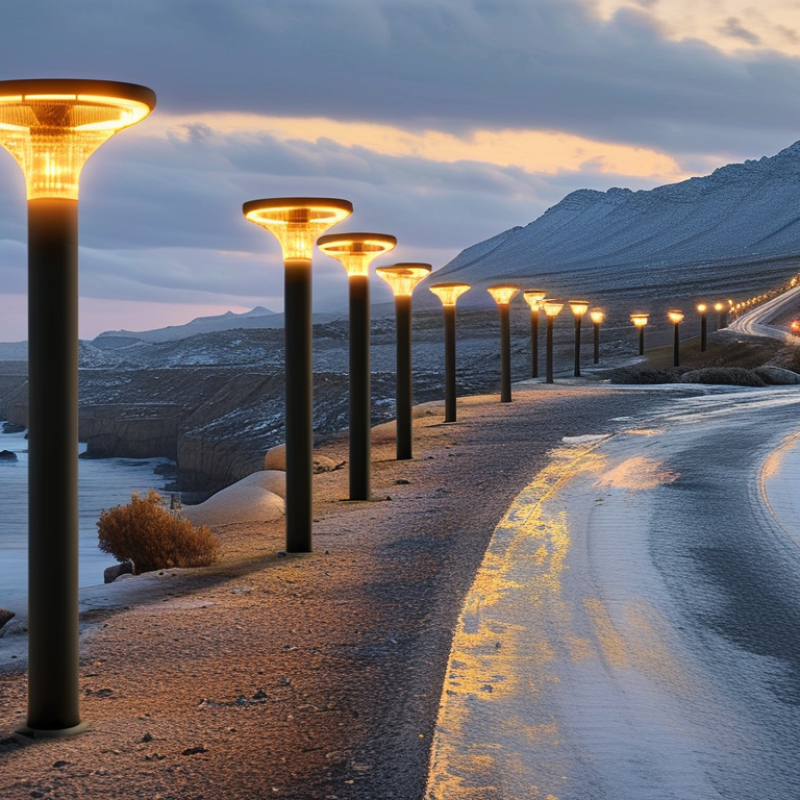
Why Choose Induction Street Lamps for Global Projects?

Induction Street Lamps: Definition and Operating Principles

Why Choose Induction Street Lamps for Global Projects?

Induction street lamps create light without electrodes inside the discharge tube. Their core parts include a gas-filled lamp, an induction coil, and an electronic generator. The generator produces a changing electromagnetic field around the tube. This field excites the gas and creates ultraviolet radiation. A phosphor coating then converts that radiation into visible light.

This design can support long operating life because there are no electrodes to wear out quickly. In practical installations, technicians still inspect the generator, seals, wiring, and heat management. A cool, dry fixture usually performs more consistently than one exposed to constant moisture. Light output also depends on the reflector, lens, mounting height, and road width. The lamp alone does not guarantee uniform illumination.

For global projects, engineers must check local voltage, frequency, temperature, and lighting requirements. A system designed for a mild coastal city may need changes in a hot inland area. Controls can reduce power during quiet hours, but poor settings may create dark sections or uncomfortable transitions. The technology is not flawless. Its initial equipment cost can be higher, and replacement parts may require specialized knowledge. Mercury-containing components also need responsible collection and recycling under applicable regulations. A careful lighting study remains essential before procurement.

Key Benefits for Large-Scale Global Lighting Projects

Why Choose Induction Street Lamps for Global Projects?

Large-scale lighting projects need dependable performance across different climates, roads, and maintenance conditions. Induction street lamps can support this demand with long operating life and fewer lamp replacements. Their electrodeless design removes a common failure point, which may reduce service visits in remote areas. That matters when a maintenance truck must travel several hours to reach one roadway. Stable light output can also improve visibility around junctions, pedestrian paths, and industrial entrances. However, performance depends on correct optical design, installation height, and local lighting requirements.

Energy efficiency is another practical benefit for municipal and infrastructure projects. Lower electricity use can reduce operating costs across thousands of fixtures. Many systems also offer steady illumination, good color consistency, and compatibility with selected control equipment. Project teams should verify dimming performance before approval. A previous planning mistake can happen when engineers focus on lamp life but overlook surge protection, enclosure ratings, or replacement access. These details often decide real-world reliability.

Tips

Request independent photometric tests and lifespan evidence. Check performance in heat, cold, dust, and humidity. Compare total ownership costs, not only purchase prices. Confirm compliance with each region’s electrical and roadway standards. Pilot a small section first. Field results may challenge laboratory assumptions. Also, review glare levels at driver eye height, because excessive brightness can reduce comfort and safety. A careful pilot can reveal maintenance habits, wiring issues, and control limitations before full deployment.

Why Choose Induction Street Lamps for Global Projects?

Typical rated-life ranges show why induction lighting can be attractive for large-scale roadway projects: longer service intervals can reduce relamping work, maintenance access, and traffic disruption. Actual performance varies by product design, operating conditions, and local specifications.

Key project benefit: Induction lamps typically offer a substantially longer rated life than high-pressure sodium and metal-halide lamps, which can support lower maintenance frequency across highways, ports, industrial zones, and municipal road networks.

Energy Performance, Service Life, and Maintenance Requirements

Choosing induction street lamps for a global project requires more than comparing wattage. In field reviews, I examine measured illuminance, operating hours, weather, and local electricity quality. Induction systems can deliver steady light with relatively low lumen depreciation. That matters on long roads, where darkening lamps create uneven patches at night. Energy savings are possible. However, results depend on fixture efficiency, optical design, controls, and tariff conditions. An older installation may not outperform a well-designed modern alternative.

Service life is a practical advantage, not a promise. Many induction lamps are rated for tens of thousands of hours, but the generator remains critical. Heat, vibration, moisture, and voltage variation can shorten electronic component life. I have seen long-lived lamps paired with failed generators. That detail is easy to miss. For coastal roads, sealed housings and corrosion-resistant hardware deserve close inspection. Cold regions also require starting tests at the lowest expected temperature.

Maintenance planning should include access, spare parts, and technician training. Relamping may be less frequent, reducing lane closures and lift equipment use. Yet cleaning remains necessary when dust, salt, or insects cover the optical surface. Inspectors should record illuminance, power draw, connector condition, and generator temperature. Local standards and replacement availability can change the real operating cost. I once treated low relamping frequency as proof of low maintenance. It was too simple. Routine inspections still protect safety, efficiency, and predictable service.

Site Conditions, Standards, and Installation Considerations

Why Choose Induction Street Lamps for Global Projects?

Site conditions should guide every induction street lamp decision. A practical survey records pole height, road width, spacing, humidity, dust, and nighttime temperatures. Measure before ordering. Induction lamps can suit remote roads where relamping is difficult and maintenance vehicles are expensive. Their long operating life may reduce service visits, but actual performance depends on the generator, ballast, enclosure, and operating environment. Extremely cold or hot locations deserve careful testing.

Standards still vary. Project teams should verify local requirements for photometry, electrical safety, electromagnetic compatibility, ingress protection, grounding, and surge resistance. Road lighting calculations must match the authority’s limits for uniformity, glare, and energy use. IEC or regional standards may support the design, while local approval remains decisive. A lamp can pass a product test yet fail a road-specific lighting calculation. That gap is easy to miss.

Installation details affect reliability. Confirm the pole’s mounting arm, wind loading, cable size, and junction-box clearance before delivery. Use sealed connectors and suitable surge protection in areas with storms. Check generator ventilation, because trapped heat can shorten component life. Commissioning should include lux measurements at several road points, not only a visual inspection. One weak assumption can distort the whole layout. I would also compare induction equipment with modern alternatives, especially where controls, dimming, or spare parts are important. The best choice is not always the familiar one.

Cost, Sustainability, and Project Selection Criteria

Why Choose Induction Street Lamps for Global Projects?

Cost, Sustainability, and Project Selection Criteria

Induction street lamps can suit projects where maintenance access is difficult or expensive. Their electrodeless design may support long operating life and stable light output. Fewer replacements can reduce labor, traffic control, and spare-part costs. However, purchase price alone gives an incomplete picture. Project teams should compare energy use, installation, servicing, disposal, and financing costs across the expected service period. A lamp that lasts longer is not automatically the most economical choice.

Sustainability requires closer inspection. Induction systems may reduce replacement waste, but many contain mercury and require controlled recycling. Their environmental value depends on responsible end-of-life handling. Modern LED systems can offer higher efficacy in some applications, so planners should compare measured photometric data rather than rely on general claims. Road width, mounting height, weather, voltage stability, temperature, and local maintenance skills also influence results. Field experience suggests that a successful pilot often reveals problems missed during desk studies. Some assumptions fail.

Tips: Request independent test reports, lighting simulations, and realistic lifetime data. Calculate total cost of ownership for at least ten years. Check glare, uniformity, color quality, surge protection, and spare-part availability. Test a small road section before a citywide rollout. Ask who will recycle failed lamps. A written maintenance plan matters.

Why Choose Induction Street Lamps for Global Projects? - Cost, Sustainability, and Project Selection Criteria

Evaluation Dimension Induction Street Lamps High-Pressure Sodium Reference LED Reference Project Selection Implication
Typical system efficacy Approximately 60–80 lm/W Approximately 80–140 lm/W for lamp efficacy; system efficacy is lower after ballast and optical losses Approximately 100–180 lm/W for modern outdoor systems Induction can reduce energy use in retrofit projects, but a photometric comparison is required before selecting it over LED.
Rated operating life Commonly 60,000–100,000 hours, depending on lamp and ballast design Typically 20,000–30,000 hours Commonly 50,000–100,000 hours, subject to rated temperature and lumen-maintenance conditions Long-life technologies reduce relamping visits, especially on remote roads, bridges, and highways.
Expected energy reduction versus HPS Often about 25–45%, depending on existing wattage, optics, operating hours, and light-level requirements Baseline reference Often about 40–70% in well-designed replacements Use measured load profiles and maintained illuminance—not wattage alone—to calculate savings.
Light quality Typically neutral to cool white; CRI commonly around 80 or higher, depending on lamp specification Usually warm light with relatively low color rendering; standard HPS is commonly around CRI 20–30 Typically available from CRI 70 to 90 or higher Induction is suitable where improved color recognition is needed but advanced controls are not essential.
Warm-up and restrike behavior Near-instant starting; generally suitable for frequent switching Requires warm-up and may require several minutes to restrike after interruption Near-instant starting and restarting Induction is advantageous in areas with unstable grids, frequent outages, or motion-based operation.
Dimming and controls Dimming may be available, but compatibility and dimming range depend on the generator and ballast Limited compared with modern digitally controlled systems Wide control options, including scheduled dimming, sensors, and network monitoring Select induction when basic reliability is more important than advanced smart-city functionality.
Maintenance requirements Low relamping frequency; electronic generator and thermal management still require inspection More frequent lamp and ballast replacement Low routine maintenance, but complete fixture replacement may be required if the LED module is not serviceable Induction can be attractive where maintenance access is expensive or hazardous.
Environmental considerations Contains mercury and requires controlled recycling at end of life; lower energy use reduces operational emissions Contains mercury and generally has higher replacement frequency Normally mercury-free; embodied impacts depend on materials, manufacturing, and replacement policy Induction projects must include lamp take-back, spill prevention, and hazardous-waste procedures.
Temperature suitability Generally stable across a broad outdoor temperature range when correctly specified Performance varies with ambient temperature and ballast condition Often performs well in cold environments, but heat management is critical in hot climates Review the complete temperature rating, enclosure design, and expected nighttime climate.
Best-fit project types Road and area-lighting retrofits, industrial yards, tunnels, ports, campuses, and locations with difficult maintenance access Existing installations where low initial modification cost is the main priority New construction, high-efficiency upgrades, connected lighting, and projects requiring precise optical control Choose the technology according to light distribution, controls, serviceability, environmental rules, and total cost of ownership.
Key procurement checks Photometric files, total system wattage, lumen maintenance, ballast life, ingress protection, surge protection, mercury handling, and local conformity certification Lamp wattage, ballast compatibility, restrike performance, and replacement availability TM-21 or equivalent lumen-maintenance data, thermal rating, driver life, surge immunity, controls compatibility, and serviceability Require a site-specific lighting simulation and a life-cycle cost model before contract award.

Note: The figures are typical industry ranges rather than guaranteed project results. Actual performance depends on fixture design, roadway geometry, operating hours, ambient temperature, maintenance conditions, local electricity prices, and applicable lighting standards.